Chelan County Dark Sky
Nestled in the heart of north central Washington, Chelan County is home to some of the most breathtaking night skies in the United States. With expansive landscapes, mountain ridgelines, and sparsely populated communities, the county has the potential to serve as a natural sanctuary for darkness — a place where the Milky Way stretches brilliantly across the horizon and stars shine with remarkable clarity. As population growth increases and development expands, however, this extraordinary resource faces a growing threat: light pollution. Protecting Chelan County’s dark skies is not only about preserving beautiful views; it is about safeguarding ecological balance, human health, and our enduring connection to the universe.

Chelan County traditionally enjoys some of the darkest skies in the country. Residents and visitors alike can witness meteor showers, planetary alignments, and the luminous band of the Milky Way without the interference common in urban areas. Yet as outdoor lighting from homes, businesses, and roadways increases, even small amounts of poorly designed illumination can accumulate into significant skyglow. Without thoughtful planning, the steady encroachment of artificial light could permanently alter the county’s nighttime character.

Our Dark Sky Initiative reflects a commitment to preserving areas where natural darkness remains largely intact. In Chelan County, this means recognizing that darkness itself is a valuable environmental asset. Artificial light, when used responsibly, enhances safety and productivity. But when it is excessive, misdirected, or intrusive, it scatters into the atmosphere and creates what is known as light pollution. This glow diminishes the brilliance of the night sky, washing out stars and obscuring celestial features that have inspired humanity for generations.
The consequences of light pollution extend far beyond astronomy. Many wildlife species depend on natural cycles of light and darkness to regulate feeding, migration, reproduction, and rest. Nocturnal animals rely on darkness for protection and navigation, while migrating birds use natural light cues to guide seasonal journeys. Excessive nighttime lighting can disorient these species, disrupt ecosystems, and alter predator-prey relationships. In this way, preserving dark skies is also an act of environmental stewardship.
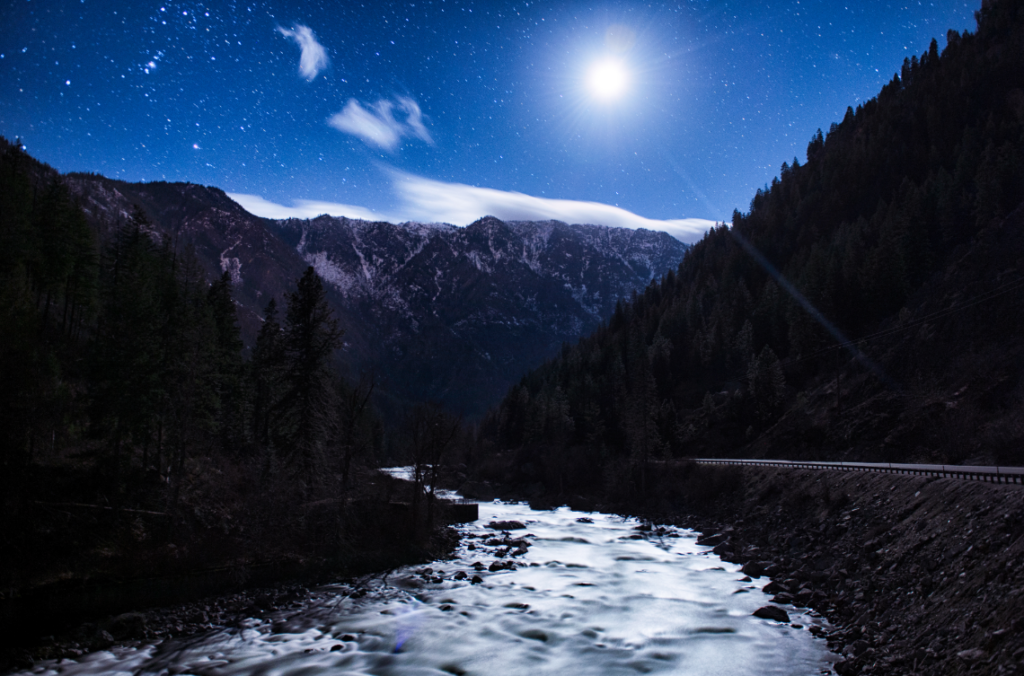
Chelan County’s night sky is more than a backdrop; it is an environmental treasure. By embracing dark sky initiatives, the community affirms that progress and preservation can coexist — and that some of our most valuable resources are those we can only see when we allow the darkness to remain.