Dark Skies of the High Desert
to: Chelan County, WA
from: Moab, UT
You know the feeling…
Summer night, sometime in your childhood. You’re on your back — a trampoline, a sleeping bag, the hood of a car, a patch of grass that seemed far enough from the porch light. You were just looking up — triangles and squares, shapes made up by connecting stars. The Milky Way wasn’t something from a textbook. It was a river of light.
That was just… summer. Childhood. You didn’t know yet that what you were seeing was rare, and getting rarer by the year. Here’s something worth sitting with: more than 80% of Americans cannot see the Milky Way from their homes. We’ve buried it under a permanent orange glow of streetlights, parking lots, and poorly aimed floodlights.
Step outside tonight and look up. Chances are what you see is a pale, washed-out imitation of the sky you remember from childhood — if you’re lucky enough to remember one at all. Most of us make that trade without noticing. You move somewhere, you grow up, the stars quietly dim.
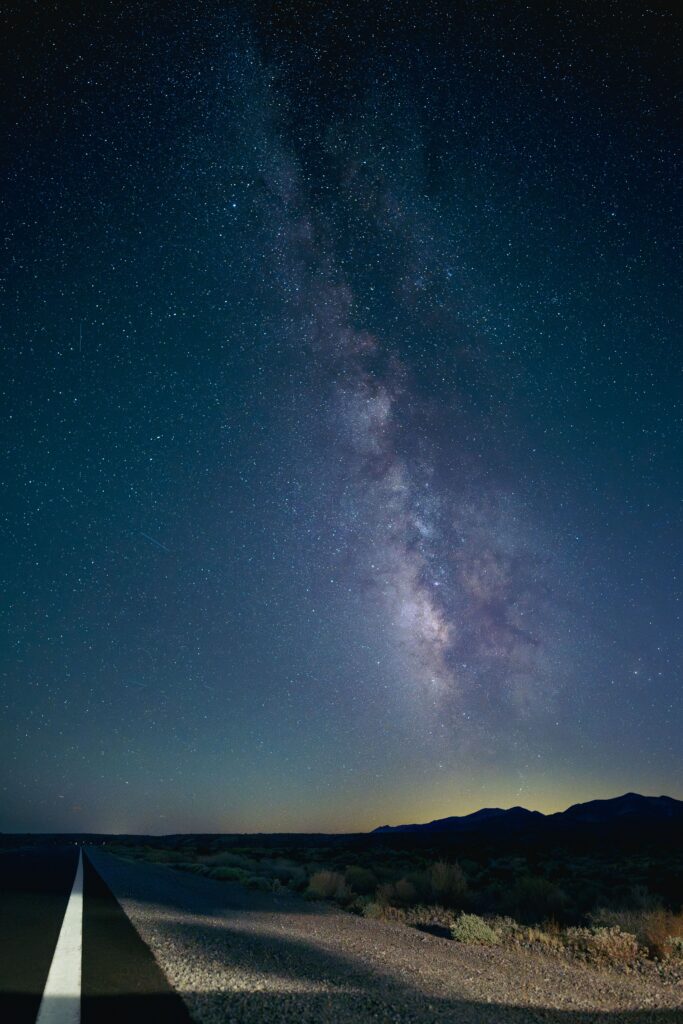
Now drive to Moab, Utah. Pull off the highway somewhere outside of town. Cut the engine. Step into the dark.
There it is again.
The Milky Way arches from one red-rock horizon to the other — a spidery luminous interconnected web stretching and weaving across the horizon. You stand there longer than planned, neck craned back and starting to ache, with a feeling of smallness that only celestial light can create. Something in you stirs. Something remembers.
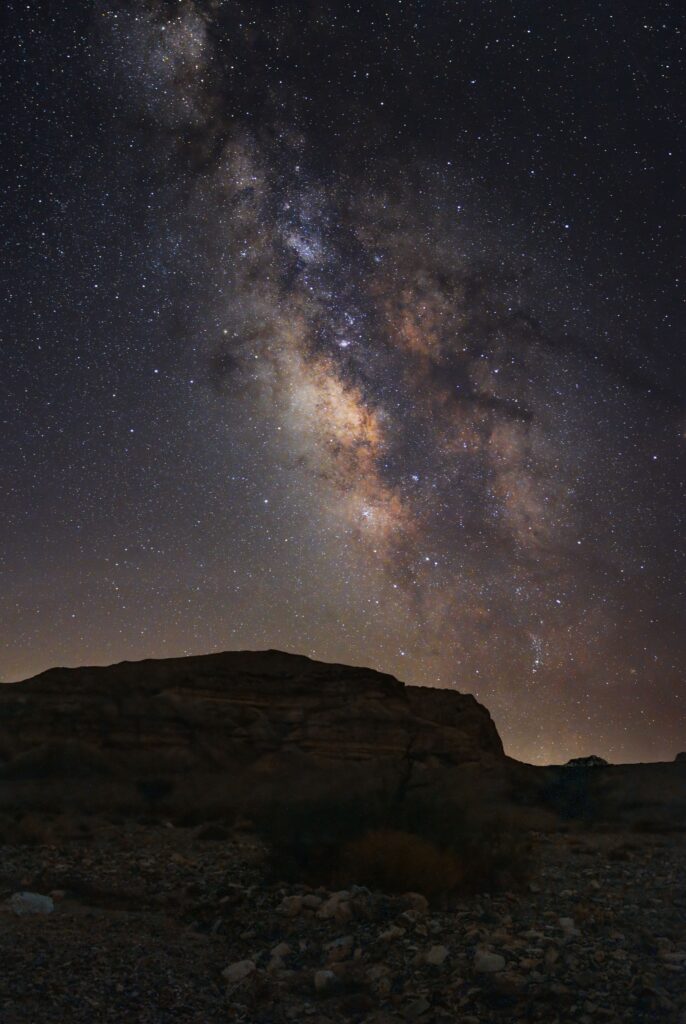
That experience doesn’t happen by accident. It happens because Moab — the town and Grand County surrounding it — made a conscious choice to protect it by joining the Dark Skies initiative.
The Dark Skies initiative, is a voluntary, community-driven effort to reduce light pollution — the excessive or misdirected artificial light that bleeds upward into the atmosphere and drowns out the stars. It’s not a mandate handed down from on high. It’s neighbors, business owners, city planners, and park rangers deciding together that the night sky is worth keeping.
Moab’s journey to earn its International Dark Sky Community designation was twenty years in the making. The city updated its outdoor lighting code in 2019, refined it further in 2023, and has been methodically swapping old streetlights for downward-facing LED fixtures ever since — lights that illuminate sidewalks and storefronts without spraying light upward into the atmosphere. Local businesses that comply even get a window sticker acknowledging their contribution. It’s community pride made visible.
Not just an aesthetic either. It’s a health issue. Our bodies are tuned to a circadian rhythm in sync with the natural cycle of daylight and darkness. Artificial light at night disrupts that clock. We built an electric world and forgot to tell our biology. It’s an ecological issue. Every creature that we share this planet with — insects, birds, sea turtles, bats, fish — evolved alongside the same natural darkness. Artificial light at night disorients migratory birds, disrupts predator-prey relationships, confuses insects that navigate by moonlight, and interferes with reproduction cycles across countless species. It’s an energy issue. Light that fires upward into the sky illuminates nothing useful. It’s wasted electricity — wasted money — paid for by municipalities and taxpayers. Switching to properly shielded, downward-facing lighting (exactly what Moab is doing) reduces that waste without making streets any darker or less safe. In fact, directed light tends to be more effective at illuminating what actually matters: the ground beneath your feet. None of this requires anyone to sit in the dark. It just requires being intentional about where we point the light. And it’s an economic issue. Research on the Colorado Plateau — the vast region that includes Moab and Utah’s national parks — found that visitors who specifically value dark skies are projected to spend nearly $5.8 billion over a ten-year period.
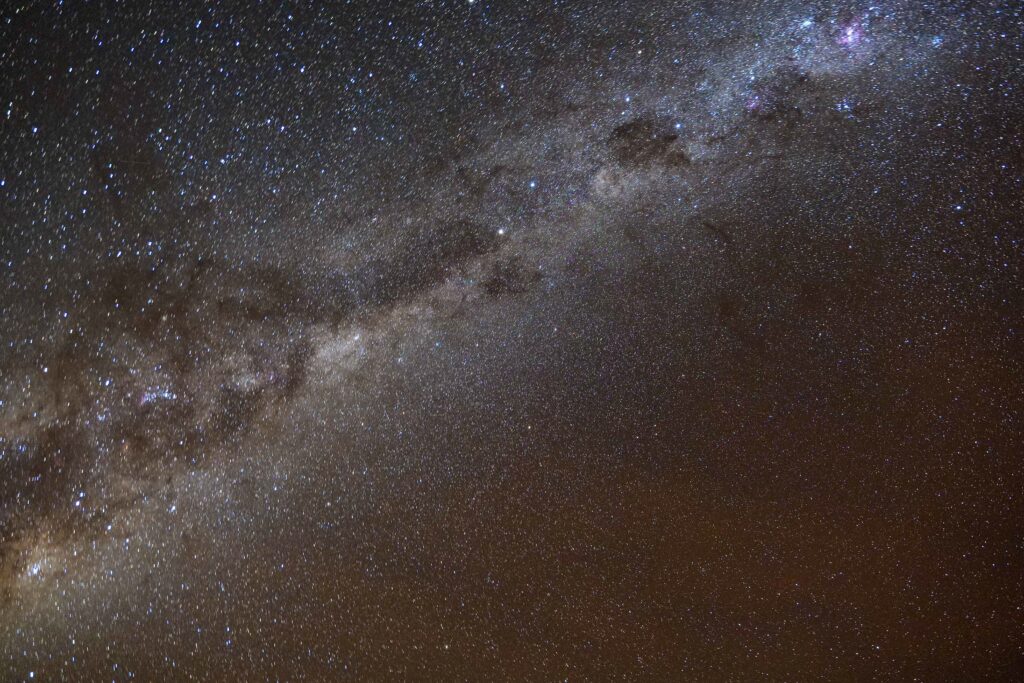
In north-central Washington, this holds true for us in Chelan County. Here our rural mountainous arid region is in a perfect position to adopt these practices and join this effort. Follow Moab’s example and all the other recognized Dark Sky communities. Protecting our night sky from unnecessary light pollution will benefit us all, tourists and locals alike. Our skies are already some of the clearest of Washington State. But we can make them better.
You didn’t need anyone to explain to you, as a kid lying under that sky, why it mattered. You just knew. The universe felt enormous, far and close at the same time. That relationship with the night sky is written into all of us somewhere. We can still look up and decide it is worth protecting: for ourselves, neighbors, and for every traveler who pulls off the road tired from driving — to be reminded the billions of stars in our galaxy are still out there, burning brightly as ever before.